|
|
From the same batch of sun-dried raw tea leaves of Yunnan large-leaf variety, pressing or not, storing or not, fermenting or not, two entirely different paths emerge.
Shengcha is made by directly steaming and pressing raw tea, followed by natural aging. Its liquor color gradually shifts from yellow-green to orange-red, offering strong stimulation and great potential for transformation. It is renowned for "the longer it ages, the more fragrant it becomes"—but this principle relies on superior raw materials, craftsmanship, and storage. Artificially aged "old tea" through wet storage is not suitable for consumption.
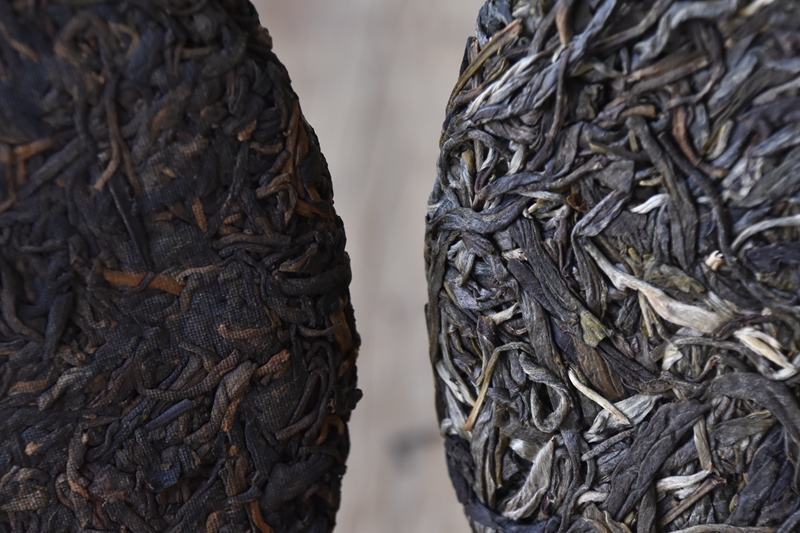
Ripe tea undergoes an additional step of artificial pile fermentation: According to public records, the modern ripening process began in Yunnan in 1973. In 1975, the artificial pile fermentation technique was successfully trialed at the Kunming Tea Factory. By watering and piling the tea leaves, with the involvement of microorganisms, the tea achieves the rich flavor typically developed over decades of natural aging in just a few dozen days. The resulting infusion is dark red, smooth, and low in bitterness.
Raw tea is bought for the future, while ripe tea is enjoyed in the present.
Practical advice for beginners: Start with ripe tea from reputable manufacturers or aged (3–5 years) raw tea, as options priced at 200–300 yuan per cake are already solid choices. High-end mountain-origin ancient tree raw tea offers exceptional depth but lacks reliable channels before it’s advisable to chase premium prices—the premium paid for mountain tea is its flavor exclusivity, not a value preservation guarantee. Treat it as a consumer product rather than an investment asset, and your mindset will be much more relaxed.
|
|

 English
 简体中文

 Post time