|
|
When it comes to ripe tea, "Imperial Pu'er" is an inescapable name. Many tea enthusiasts, upon first hearing this name, naturally associate it with tribute tea, assuming it was a tea exclusively reserved for the imperial family in ancient times. This association carries a romantic undertone but can easily lead to cognitive bias.
The term "Palace" carries the cultural heritage of tribute tea history and also serves as a classification for raw material grades within the modern ripe tea system. With its uniquely rich internal substances from buds, it stands as a delicate and mellow branch within the ripe tea spectrum.
Palace Pu'er, the highest grade in the refined classification of ripe tea, is not produced by individually fermenting fresh leaves. Instead, it is derived from the finest materials screened after the completion of a unified pile-fermentation batch. Based on Yunnan large-leaf sun-dried raw tea, it primarily consists of tender shoots—single buds and one-bud-one-leaf—with a slight presence of small leaves, and is almost entirely free of stems and coarse or aged leaves.
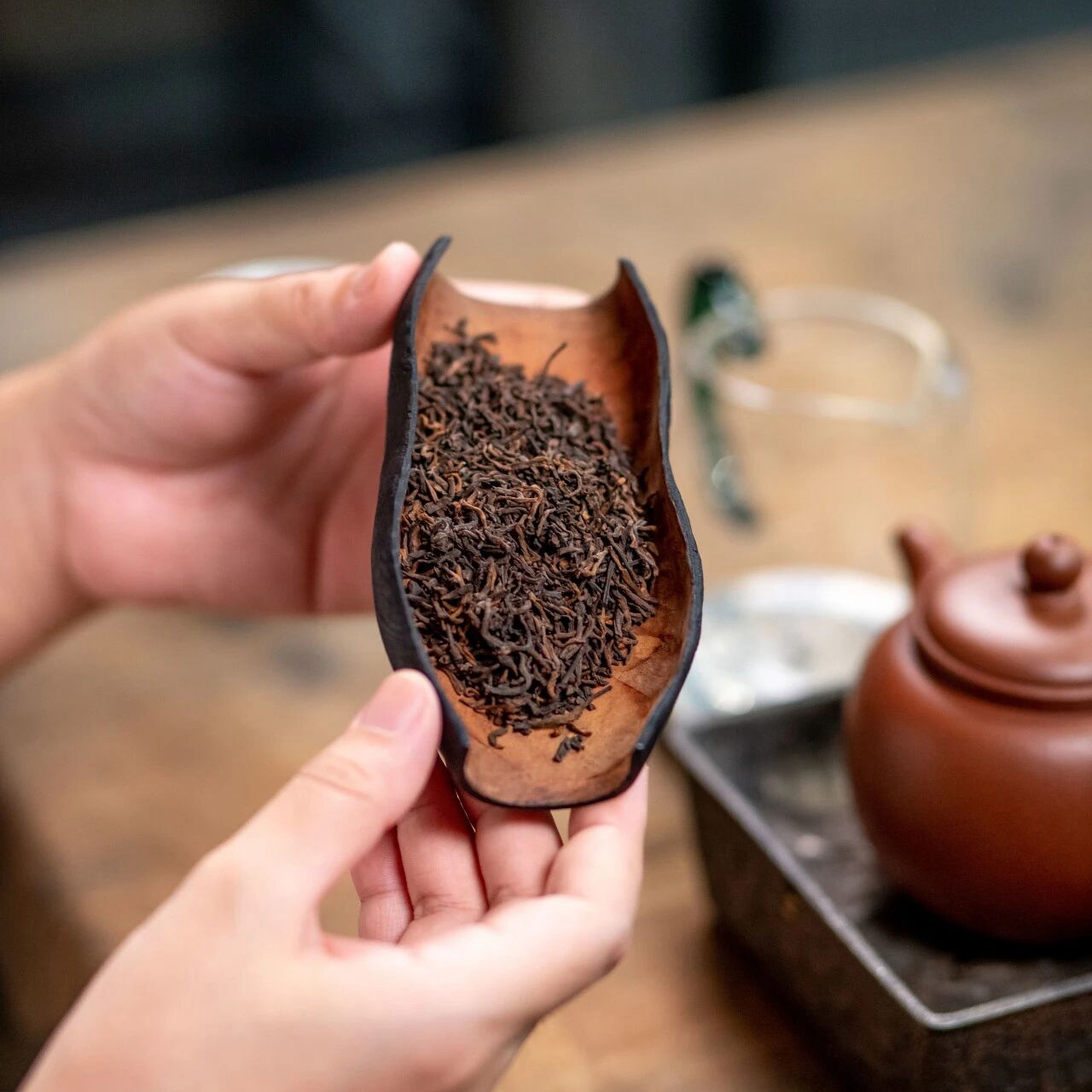
The dried tea leaves have tightly rolled, uniform buds covered in golden down, with an oily luster and short, plump leaves. Within the same batch, this grade has a very low yield, typically accounting for only 5%–10% of the entire batch, due to the scarcity of raw materials.
The material structure of high-grade raw materials determines the flavor foundation of imperial Pu'er tea. The ingredients for imperial Pu'er tea include buds and tender young leaves and stems. The biochemical composition of newly sprouted tea leaves differs significantly from that of mature leaves: buds have higher proportions of soluble sugars, pectin, and free amino acids; lower levels of cellulose and lignin; and a lower phenol-amino ratio (the ratio of tea polyphenols to amino acids in tea leaves. A high phenol-amino ratio indicates a relatively higher proportion of tea polyphenols, resulting in more pronounced bitterness, higher concentration, and intense sweetness aftertaste; a low phenol-amino ratio means a relatively higher proportion of amino acids, leading to a more refreshing and milder astringency). This results in a less stimulating tea infusion with a more pronounced sweet and mellow taste.
This material composition determines the inherent style characteristics of Imperial Pu'er tea: a more balanced sweet and bitter profile, rich and full-bodied liquor, thick and mellow texture, with a natural sweetness. This unique style makes Imperial Pu'er highly sought after by tea enthusiasts.
|
|

 English
 简体中文

 Post time