|
|
Those who have tasted aged tea share a common sensation: sweetness. Not the kind of sweetness from added sugar, but a naturally sweet and mellow taste that emerges on the back of the tongue after sipping the tea. Why isn't fresh tea sweet? Where does the sweetness of aged tea come from?
Here's the answer: Starch and cellulose are changing. Tea leaves contain starch and cellulose.
The leaves of raw tea contain a large amount of starch and cellulose. Starch is the substance by which plants store energy, while cellulose is the structural material that constitutes plant cell walls. Neither of them has a sweet taste on its own.
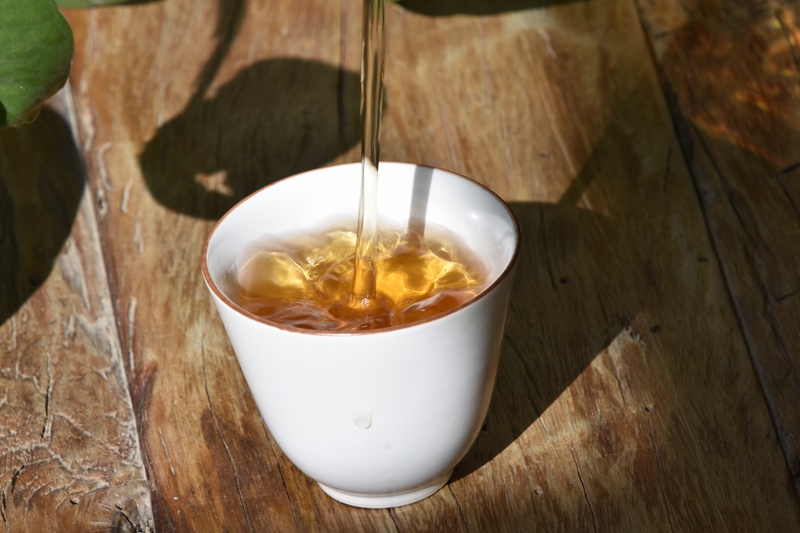
The reason why freshly brewed tea tastes less sweet and even slightly astringent is primarily because the starch and cellulose in the leaves remain in their original state without hydrolysis, resulting in minimal free sugar content in the tea infusion. What you taste is the astringency of tea polyphenols and the umami of amino acids, but there is hardly any sweetness.
Some rush to drink their tea after just three years, finding it still not sweet enough; others wait ten years, and when steeped, it bursts with rich sweetness. The difference lies not in the tea, but in time.
So next time you drink a cup of sweet and mellow aged tea, don’t think it’s some miraculous effect. It’s simply starch and cellulose turning into glucose—a chemical reaction, but one that takes time.
|
|

 English
 简体中文
简体中文

 Post time