|
|
Many people still believe that dark tea is simply black tea with a darker color. This misunderstanding is quite significant, as the two types of tea differ entirely in both production methods and taste.
Fermentation: one relies on enzymes, the other on bacteria, this is the most fundamental difference between the two.
Black tea is a fully fermented tea.
The fermentation process relies on the enzymes in the tea leaves themselves. After picking, the fresh leaves are first withered to soften them and activate the enzymes. Then, they are rolled to break the cell walls, allowing tea polyphenols and enzymes to interact and undergo enzymatic oxidation. This reaction is rapid and can be completed in just a few hours. Afterward, high-temperature drying "kills" the enzymes, halting the fermentation. In the industry, this process is referred to as "wuhong," differing by just one character from the "wudui" in dark tea, but the principles are entirely distinct.
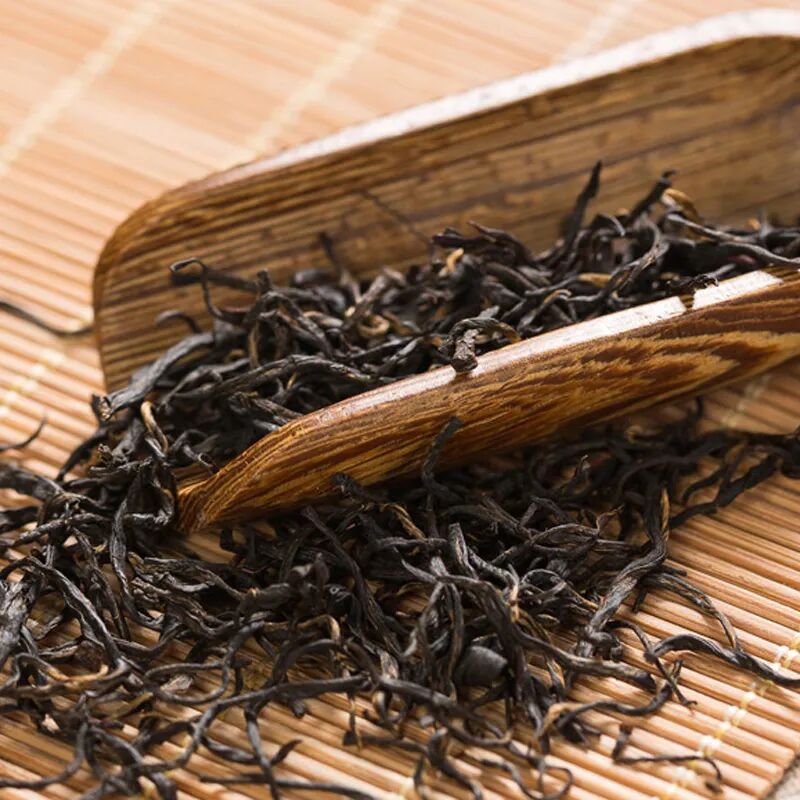
Dark tea is a post-fermented tea.
Its process is different: first, the tea leaves are dried and the enzymes are deactivated by high temperatures, then they enter the "wet-pile" stage. Without the help of enzymes, what drives the fermentation of dark tea? It relies on microorganisms. The tea leaves are sprinkled with water and piled up, where various beneficial bacteria begin to multiply in the humid and hot environment. These bacterial communities metabolize and produce new enzymes to transform the tea's internal compounds. This process is slow—the wet-pile stage alone takes several weeks, and after production, the tea continues to transform during storage, becoming more fragrant with age.
A metaphor to help you remember: The fermentation of black tea is like an apple cut open oxidizing and turning red in the air, which is a chemical reaction; while the fermentation of dark tea is like pickling Chinese cabbage, where microorganisms do the work.
|
|

 English
 简体中文
简体中文

 Post time 2026-7-31 10:27:05