|
|
Fine mountains and waters yield fine tea. From this perspective, the superior quality of Pu'er tea indeed relies heavily on high-altitude origins for its raw materials. However, beyond the origin and ingredients, the craftsmanship of tea production also plays an inseparable role in determining the flavor of Pu'er tea. As the saying goes, "Good tea requires good materials," yet even with premium ingredients, one may not always produce exceptional tea. Why is this the case?
Whether it's raw or ripe Pu'er tea, both require varying degrees of processing based on the raw material. Although Pu'er tea is relatively simpler in production compared to green tea or oolong tea, it is by no means as simple as merely steaming and pressing the raw tea into cakes to complete the process. If that were the case, pure-ingredient Pu'er tea would be the easiest method to produce, as long as the quality of the received raw tea is ensured, resulting in excellent tea.
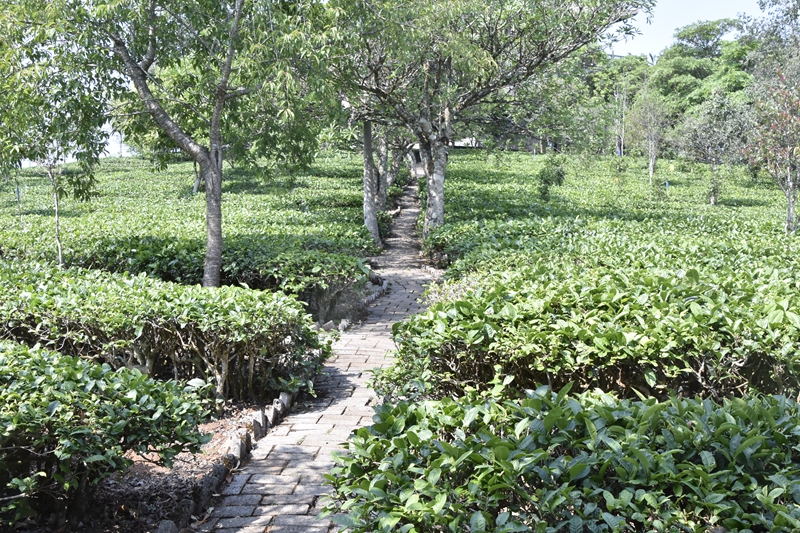
As is well known, Pu'er tea has always been prized for its traditional handmade production process. For instance, manual picking, manual withering and fixation, manual rolling, manual sorting of yellow leaves, and manual stone grinding for pressing. Take the withering and fixation stage in Pu'er tea production, which is arguably the most critical step. It's akin to stir-frying vegetables—skilled chefs can produce perfectly cooked vegetables with excellent color, aroma, and taste, while less skilled ones may end up with inedible results.
This is precisely why, despite being from the same tea mountain, the taste of tea produced by different people varies so significantly. Each master cultivates their own unique insights, which are not shared among peers. Every step in manual tea-making is not merely a technique but an art form, a tradition, and also a form of intangible cultural heritage. Therefore, the quality of Pu'er tea is highly correlated with both the tea-making process and the skill level of the master.
|
|

 English
 简体中文
简体中文

 Post time 2026-7-24 10:23:36