|
|
Would you like some black tea?
If you use a white porcelain or glass cup, pay a little attention—sometimes a bright golden ring may appear at the edge of the tea. It doesn’t happen every time, nor is it present in all types of black tea. Experienced tea drinkers call this the "golden ring.".
To be precise, it is the signature left by theaflavin.
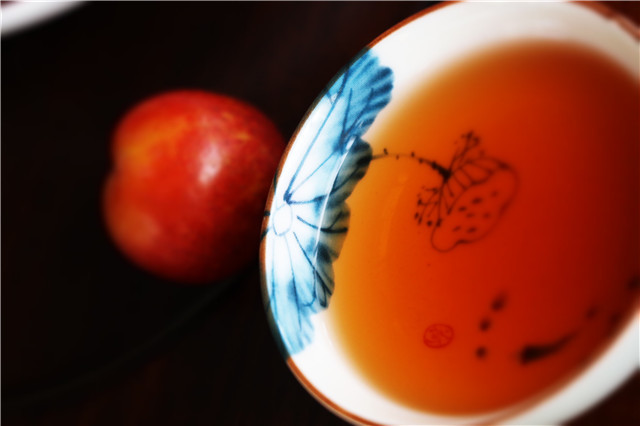
Pour the black tea into a white porcelain cup and observe it in the light. If the theaflavin content is sufficiently high, a golden ring will appear at the junction between the tea surface and the cup wall. This golden ring is not an added color but the result of the orange-yellow hue of theaflavin itself, which accumulates at the edge of the tea liquid and becomes visible under light.
In short, the more pronounced the golden ring, the higher the tea polyphenol content.
This is directly related to the tea-making process. During black tea fermentation, the temperature must be maintained between 25 to 30 degrees Celsius with constant humidity, allowing polyphenol oxidase to fully oxidize catechins into theaflavins. Insufficient fermentation results in fewer theaflavins and a faint golden ring, while excessive fermentation causes theaflavins to further oxidize into thearubigins or even theabrownins, causing the golden ring to disappear as well.
|
|

 English
 简体中文
简体中文

 Post time 2026-7-6 14:54:47