|
|
1. Temperature: It is advisable to maintain a constant temperature of 20~30℃ year-round, avoiding sudden temperature fluctuations. Excessively high temperatures can accelerate improper oxidation, resulting in a "stewed flavor," while drastic temperature variations may cause condensation to form on tea cakes, producing a musty taste. Simply keep them away from radiators, stoves, and air conditioning vents.
2. Humidity: Maintain relative humidity between 55% and 70%, with a maximum not exceeding 75%. Below 50%, conversion nearly halts, while above 75%, mold is highly prone to grow. It is recommended to have a hygrometer for continuous monitoring. During the rainy season or "south wind" period in the south, close windows and use a dehumidifier. In the dry winter and spring seasons of the north, place containers of water or use a humidifier to maintain moisture.
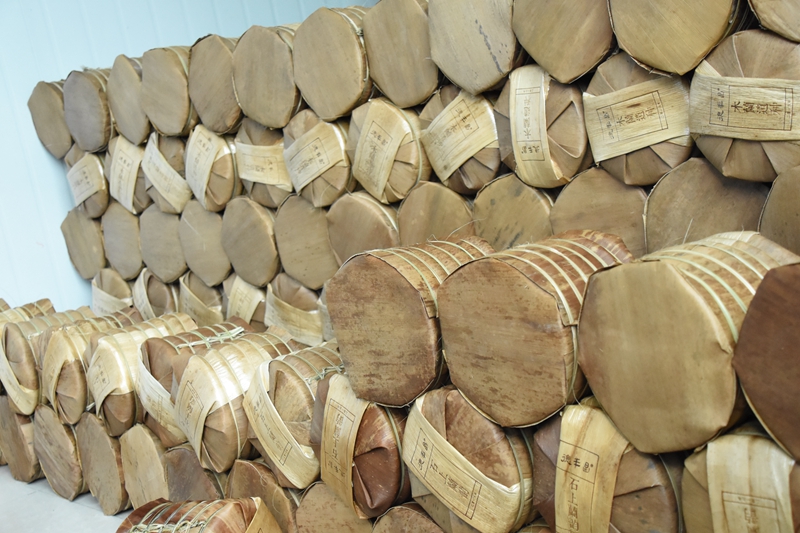
3. Lightproofing: Pu'er tea must be kept away from direct sunlight. Ultraviolet rays can damage tea polyphenols and aromatic compounds, causing the tea cake to discolor and develop a sun-bleached taste, while its original honey fragrance and aged aroma will be lost. Store it inside a cabinet or in a dim corner of the study, as the paper box itself also provides light protection.
4. Ventilation: A small amount of oxygen is required for post-fermentation, but strong winds should be avoided as they can carry away the aroma and cause excessive moisture loss in the tea cakes. Daily ventilation can be achieved through natural indoor air circulation. In sunny weather, short-term window ventilation is acceptable, while windows must remain closed during rainy or dusty days.
5. Odor-free: The porous structure of tea leaves has an extremely strong adsorption capacity, firmly and irreversibly absorbing odors such as cooking fumes, camphor balls, perfume, cosmetics, and the smells of onions, ginger, and garlic. The tea storage area must be kept away from kitchens, bathrooms, and spaces where scented candles are placed.
|
|

 English
 简体中文
简体中文

 Post time 2026-6-26 15:21:04