|
|
Fresh tea leaves cannot be directly used for brewing. They have a grassy aroma, the inherent flavor of plants, which must be removed through fixation.
The purpose of fixation is to destroy the tissues of fresh leaves with high temperatures, causing water to dissipate and the grassy flavor to fade, allowing the aroma to emerge. Fresh leaves contain an enzyme, essentially a protein, which controls the speed of tea transformation. It is sensitive to heat.
Enzymes work depending on temperature. When leaf temperature rises above 20°C, activity begins to increase. Around 40°C, it peaks. Beyond 45°C, activity declines. By 65°C, activity is nearly gone.
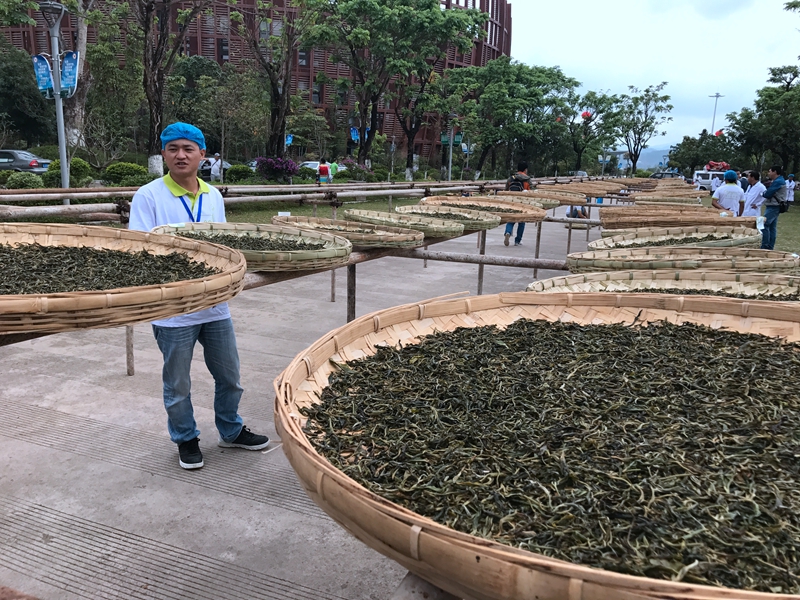
No, to be precise, it's essentially lost. The enzyme itself remains. There's another more detailed classification: the most severe damage occurs between 35°C and 45°C, while 60°C to 80°C still holds up but becomes inactive. Only above 82°C does it become completely inactivated.
Green tea fixation aims for thorough killing. The wok temperature is raised above 100°C to achieve vibrant green color, green tea liquor, and green leaf base, delivering a refreshing taste. Pu'er tea cannot be treated this way.
The fixation process must deactivate most polyphenol oxidase to prevent excessive oxidation of polyphenols while leaving some enzyme activity for subsequent post-fermentation. Industry insiders thus advise that the leaf surface temperature during pan-frying fixation should not exceed 80°C—a critical threshold.
|
|

 English
 简体中文

 Post time