|
|
1. The mountain field production area determines the foundation
Those who know tea well understand: the land shapes the tea.
For the same varieties, such as Zhengshan Xiaozhong and Jin Junmei, the core production area of Tongmu Pass and the peripheral outer mountain areas exhibit stark differences in taste, aroma, and water quality, with costs varying by several times.
The core production regions boast unparalleled altitude, humidity, soil, and ecology, resulting in extremely low yields and annual scarcity. This rarity is a "blessing from nature," justifying its premium value as a scarce commodity.
Even with perfect craftsmanship, the delicacy of the tea liquor, wild mountain charm, and layered sweetness of outlying mountain teas can never match those of core production areas.
2. Raw material grade determines the cost
The most straightforward difference in black tea prices lies in the harvesting standards.
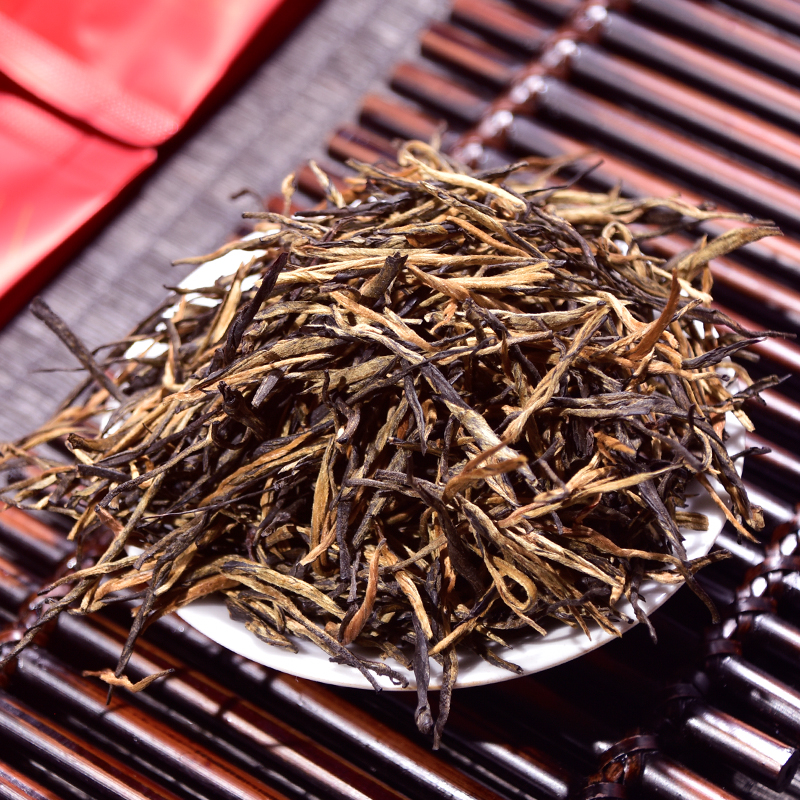
The reason Jin Jun Mei can become a representative of premium black tea is not hype, but its production from pure single buds.
It takes tens of thousands of tea buds to produce just one pound of dried tea, with extremely high labor costs for manual picking and raw material losses.
Full buds, one bud with one leaf, and one bud with two or three leaves, the grades gradually decline, the taste shifts from delicate and sweet to coarse, astringent, and plain, while the prices also drop sharply.
The younger the buds, the purer the material, the lower the yield, the higher the price. This is the solid raw material cost.
3. Manufacturing process determines texture
Good tea is three parts ingredients and seven parts craftsmanship.
Traditional black tea emphasizes meticulous craftsmanship. For instance, the classic Lapsang Souchong, a type of Congou black tea, requires smoking with pine wood and slow roasting, involving intricate processes that demand significant time and effort, making its cost far higher than machine-electric roasting.
High-end Gongfu black tea undergoes multiple processes of withering, rolling, fermentation, refining, and sorting to remove dust, aged leaves, and impurities, resulting in a clean, transparent tea infusion free of off-flavors.
Only with refined craftsmanship can the tea brew be thick, the aroma steady, and the aftertaste enduring. This kind of rarity is the result of valuable craftsmanship.
|
|

 English
 简体中文

 Post time