|
|
The "red" in black tea does not necessarily mean the dried leaves are a bright red. More commonly seen is the orange-red or bright red hue of the brewed tea. When poured into a white porcelain or transparent cup, the color becomes clearly visible against a clean background.
The production of black tea typically involves processes such as withering, rolling, fermentation, and drying. The commonly mentioned "fermentation" primarily refers to the oxidation process facilitated by enzymes within the tea leaves. Certain components in the tea undergo transformation, forming substances like thearubigins and theaflavins, which contribute to the color and flavor of black tea.

To understand black tea, one can start with familiar names like Keemun, Dian Hong, and Lapsang Souchong. However, names are just the entry point—the actual aroma depends on the raw materials, craftsmanship, and storage conditions. You can't make conclusions about each tea solely based on its region of origin.
Some black teas evoke floral or fruity notes, while others offer a more robust flavor. Detecting a "sweet aroma" doesn't necessarily mean sugar was added. When describing scents, familiar foods or flowers are used as metaphors to aid in characterization, not as ingredient lists.
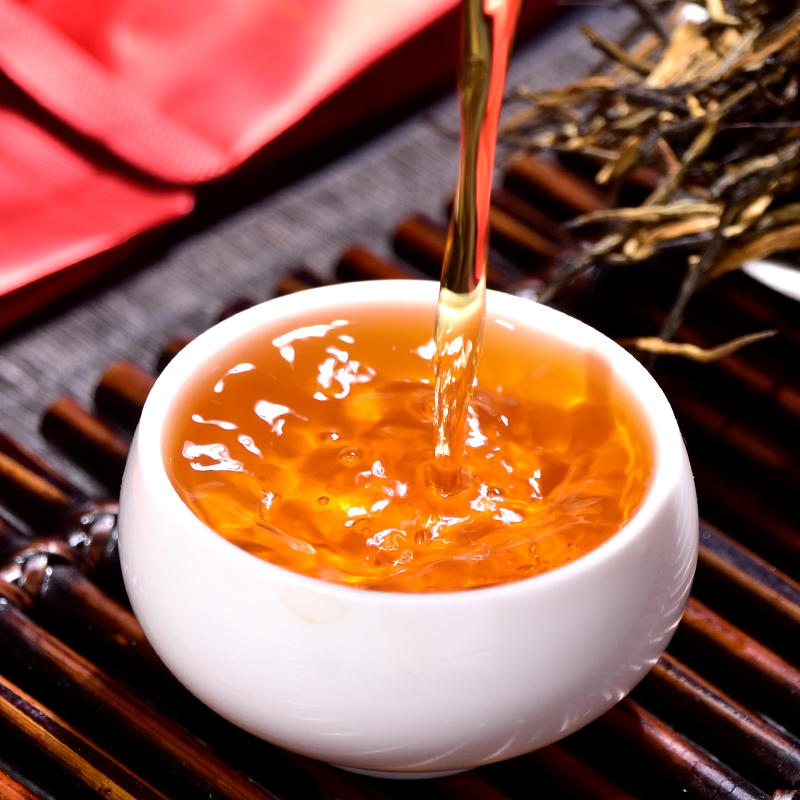
To appreciate a cup of black tea, follow these two steps: first, inhale its aroma, then wait until the tea cools to a comfortable temperature before taking a sip. Observe whether the fragrance matches the taste and assess if the strength is just right.
To understand black tea, start by memorizing its color, aroma, and whether it tastes pleasant to you.
|
|

 English
 简体中文

 Post time