|
|
The flavor of Pu'er tea is never the elusive "mountain essence," but rather a geographical manual written by soil, altitude, and precipitation.
Lao Ban Zhang—bitter aftertaste with a quick return of sweetness, like a crisp rainstorm.
Iceland — high sweetness, low astringency, like the crisp stream in a valley.
Yiwu—rich brothiness, smooth on the palate, like old cotton cloth pressed against the tongue.
These differences are measurable and distinguishable. The "one mountain, one flavor" mentioned by seasoned tea connoisseurs is not a metaphor but a fact.
The newly produced Pu'er tea has a high content of tea polyphenols, with a bitter taste that feels like biting into a green-skinned fruit.
After being stored for several years, the tea polyphenols oxidize, the astringency settles, the color shifts from yellow-green to amber, and the aroma transitions from fresh and crisp to aged and mellow.
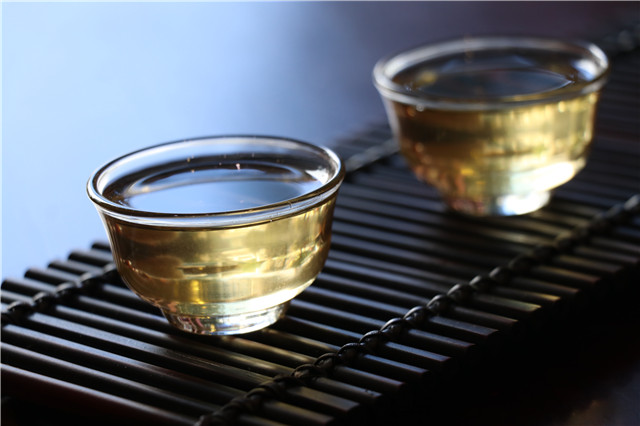
The same tea cake represents two distinct life states this year and a decade later. This transformation requires the combined effects of temperature, humidity, and a clean environment. It is not a matter of perception but a chemical reaction.
Caffeine and tea polyphenols enter the body, affecting the circulatory system. Some people experience a slight warmth in their backs, others have fine sweat on their palms, while some remain completely unaffected from head to toe. This is not the mysterious power of "tea qi," but rather a physiological response. Different constitutions naturally produce different reactions.
In the final analysis:
Origin determines where this cup of tea comes from.
Time determines what this cup of tea becomes.
The body determines what this cup of tea means to you.
You cannot control any of these three. And what you cannot control is precisely what you drink—entirely.
So, for the next cup of Pu'er tea, there's no need to pry for stories or chase for mysteries. Just sip it, then let it reveal the answer to you.
|
|

 English
 简体中文
简体中文

 Post time