|
|
When it comes to black tea, people used to think more of varieties like Lapsang Souchong, Keemun, and Dian Hong. But now, the historic and legendary English and Indian black teas are also gradually gaining popularity.
Why is it legendary? It is the high renown of Ying Hong abroad. In 1963, it was favored by the British Queen, and soon became wildly popular across Western society. There is no denying that Yingde black tea is truly a coveted jewel of nature.
Yingde has a long history of tea production. In the "Tea Classic: Chapter Eight on the Origins" by Lu Yu of the Tang Dynasty, it is recorded: "In Lingnan, tea grows in Fuzhou, Quanzhou, Shaozhou, and Xiangzhou... often found in abundance, with exceptionally fine flavor." Here, Shaozhou primarily refers to Yingde.
The Yingde area is located on the southern edge of the Wuling Mountains, forming a hilly terrain within the Nanling Mountain range. It features a unique landscape where three rivers converge, characterized by a subtropical monsoon climate—warm, rainy, free from scorching heat or severe cold. With fertile natural soil, it is an ideal region for tea cultivation.
As early as the Ming Dynasty, the locally produced tea from Yingde was already a tribute to the imperial court. By the Qing Dynasty, Yingde tea had become popular among the common people and enjoyed widespread international acclaim by the mid-19th century.
In 1959, Yingde black tea was successfully trial-produced and gained acclaim both domestically and internationally for its exceptional quality. At that time, in response to the strategic need of New China to generate foreign exchange through exports, Yingde introduced Yunnan large-leaf tea varieties for cultivation and research, leading to the development of Yinghong No. 9 and once again creating the glory of Yingde's tea industry.
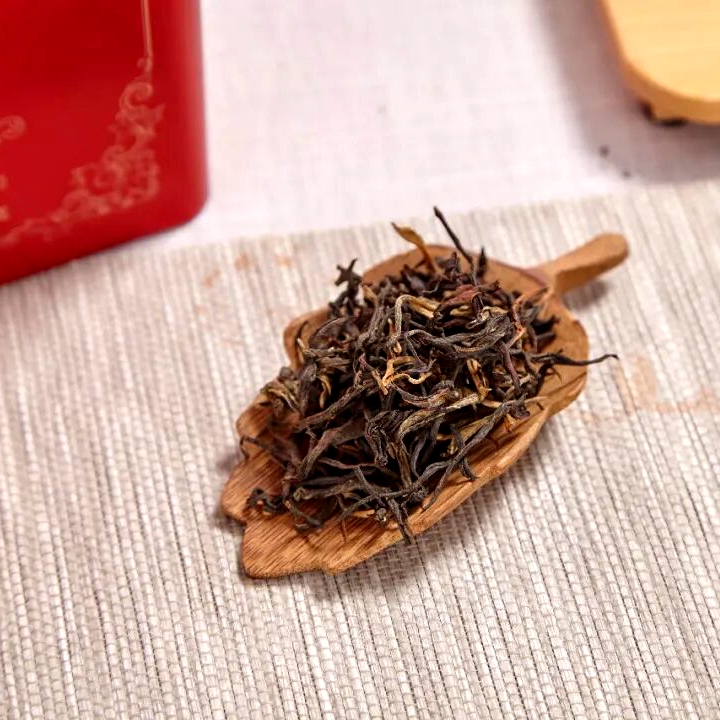
Yinghong No. 9, improved from Yunnan large-leaf tea, possesses the quality characteristics of "strong, intense, fresh, and brisk" typical of large-leaf black tea. Additionally, its unique floral aroma and sweet potato fragrance, developed through Yingde black tea processing techniques, further highlight its distinctiveness.
|
|

 English
 简体中文
简体中文

 Post time 2026-8-12 15:34:28