|
|
Whether to rinse black tea or not has puzzled many tea enthusiasts who love drinking it. Many believe rinsing removes impurities like tea dust and debris from the leaves, but this is not the case.
The production process of black tea includes a step called rolling, during which the tea juice is extracted and adheres to the surface of the dried tea leaves. This tea juice is rich in nutrients, all of which dissolve in the first infusion of tea. Discarding the first brew of black tea is equivalent to wasting its most nutritious portion. Moreover, black tea is not overly strong, and the flavor of the first infusion is particularly delightful.
In most cases, the primary purpose of "washing tea" is to moisten the leaves, aiding their unfolding and the extraction of tea juice, allowing drinkers to quickly perceive the tea's fragrance. However, as black tea itself extracts quickly, it is not recommended to wash it.
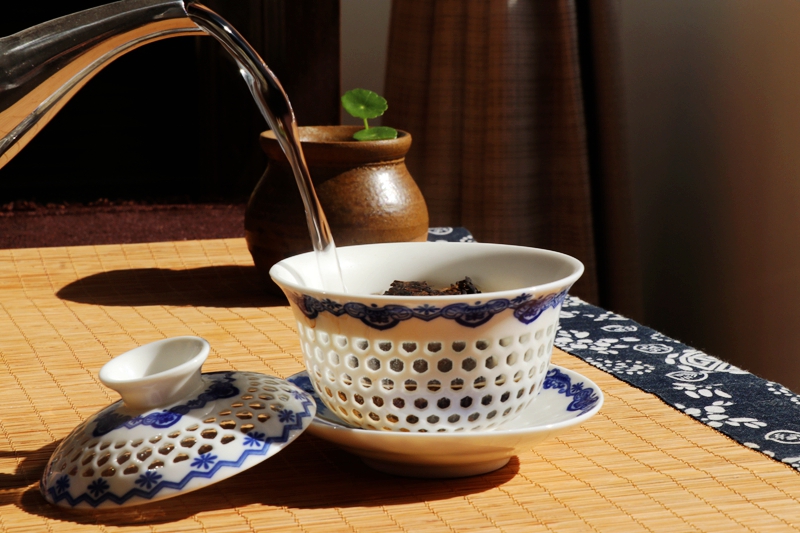
If you feel the tea isn’t clean enough, we recommend using the "scrape-off foam" tea brewing method. This method involves pouring an appropriate amount of tea leaves into the brewing vessel, then using the "high pour" technique to fill the vessel with boiling water at once. At this point, the tea will produce abundant foam that floats on the surface. We commonly assume the foam is impurities from the tea leaves (though in reality, the foam in tea is not entirely caused by impurities in the leaves—on the contrary, it primarily results from a substance called tea saponin found in the leaves). Simply scrape off the foam, and the tea is safe to drink. This approach not only cleanses the mind but also minimizes the loss of nutrients from the tea leaves.
|
|

 English
 简体中文
简体中文

 Post time 2026-7-21 10:53:28